

 Current position >About Us
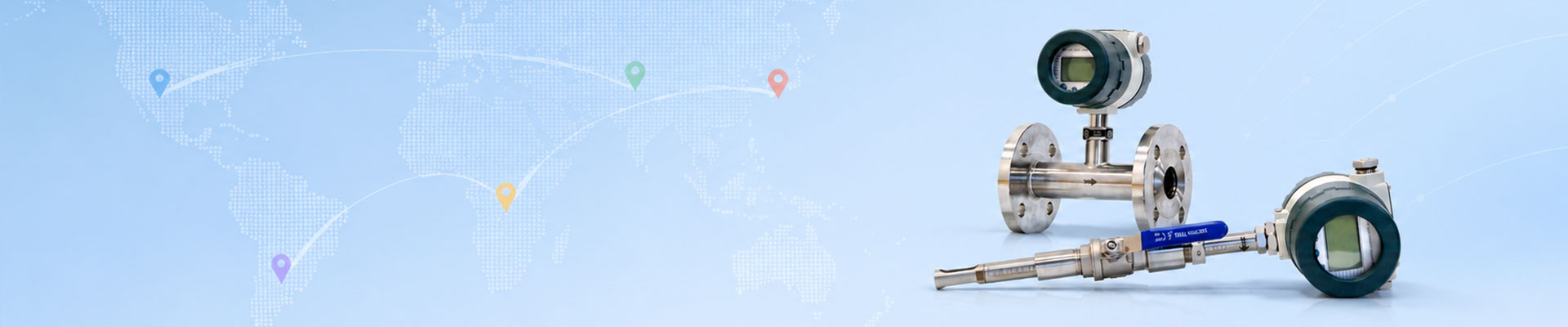
Vortex Flow Meters: Reliable Steam and Gas Measurement with No Moving Parts
Quick Answer: Vortex flow meters measure saturated steam, superheated steam, compressed air, natural gas, and low viscosity liquids without moving parts. They handle high temperature and high pressure service with low maintenance. For a quote, send your pipe size (DN), pressure (bar), temperature (°C), and flow range to Silver Automation Instruments.
Why Engineers Choose Vortex Flow Meters for Steam and Gas
A vortex flow meter uses a shedder bar inside the pipe. The bar creates alternating vortices as flow passes. A sensor detects the vortex frequency. The frequency is proportional to flow velocity. This is a direct measurement method. It works well in steam and gas because there are no rotating parts or impulse lines.
We have supplied vortex flow meters for saturated steam lines in Vietnam, natural gas distribution in Indonesia, and compressed air systems in Saudi Arabia. Most customers ask for 4-20 mA HART output and local display. Some plants need pulse output for a PLC or flow computer.
No Moving Parts Reduces Maintenance and Downtime
An orifice plate has edges that wear. A turbine meter has bearings that fail. A vortex meter has a blunt shedder bar and a sensor that is separated from the flow. No moving parts means less maintenance. This matters on steam lines where shutdowns are expensive.
A food processing plant in the Philippines replaced a turbine meter on a steam line with a DN50 vortex flow meter. The maintenance team stopped doing monthly bearing checks. We have seen the same pattern on customer sites many times.
Steam, Gas, and Liquid Applications
Vortex flow meters are not limited to steam. They measure natural gas, biogas, compressed air, nitrogen, and low viscosity liquids such as water, condensate, and light chemicals. They do not work well on slurries or high viscosity fluids. Viscosity above 10 cP can reduce accuracy. Use this meter for clean fluids with a Reynolds number above 20,000.
Common processes include boiler steam output, compressed air distribution, and natural gas fuel lines. A palm oil refinery in Malaysia measures boiler steam at 12 bar and 210 °C. A wastewater plant in Mexico measures digester biogas. A gas processing site in Nigeria uses a DN100 vortex flow meter for fuel gas. A paint manufacturer in Southeast Asia measures solvent vapor on a recovery line.
Specifications That Matter for Selection
Line sizes from DN15 to DN300 cover most process lines. Process pressure up to 100 bar is common, with higher ratings available. Process temperature from minus 40 to 350 °C is standard. For high temperature steam above 350 °C, we recommend a custom version with extended electronics.
Accuracy is typically ±1.0% of reading for gas and steam. Liquids can reach ±0.75% of reading. Turndown is 10:1 to 20:1 depending on pipe size and fluid. Wetted materials are 316L stainless steel as standard. Hastelloy C is available for corrosive gas. Outputs include 4-20 mA HART, pulse, and RS485 Modbus. Optional PT100 temperature input enables saturated steam mass flow compensation.
For hazardous area installation, choose ATEX Zone 1 or Zone 2 certification. For boiler steam custody transfer, pair the meter with a flow computer and pressure transmitter. Silver Automation Instruments supplies the full loop including pressure transmitters and paperless recorders.
Installation and Straight Run Requirements
Vortex meters need a stable flow profile. Install the meter with at least 15 pipe diameters of straight run upstream and 5 pipe diameters downstream. If there is a control valve, elbow, or pump upstream, add more straight run. For a DN100 line, that means 1.5 meters upstream and 0.5 meters downstream. This is a practical rule we give installers.
Do not install