

『Water Flow Meter Calibration Services: Authorized Metrology Testing Facilities』Related information(v cone flow meter|rotary gas meter|gallon meter|gear meter|metal tube rotameter|glass tube rotameter|nutating disk meter|transit time ultrasonic flow meter|wedge flow meter|pd meters|hydraulic flow meter|ultrasonic water flow meter|water flow meter|air flow meter|magnetic water flow meter|oxygen flow meter|gas flow meter|argon flow meter|air velocity meter|gasoline flow meter|fuel flow meter|ultrasonic water meter|digital water meter|nitrogen flow meter|solid flow meter|Oxygen tank flow meter|digital water flow meter|diesel fuel flow meter|steam flow meter|02 flow meter|compressed air flow meter|oil flow meter|liquid flow meter)
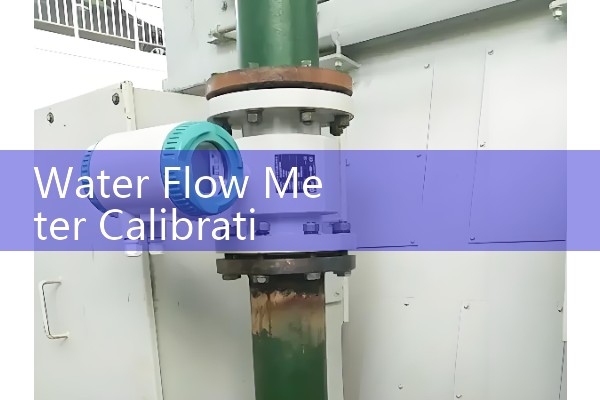
Water Flow Meter Calibration Services: Authorized Metrology Testing Facilities
Quick Answer: Calibration of water flow meters must be traceable to national or international standards. Silver Automation Instruments provides ISO 17025 accredited calibration services through authorized metrology labs in Southeast Asia, Oceania, Africa, the Middle East, and Latin America. We calibrate electromagnetic, ultrasonic, Coriolis, vortex, and turbine water meters in pipe sizes from DN15 to DN600 with an uncertainty of ±0.15 % to ±0.5 % depending on meter type and installation conditions.
Most plant managers and instrument engineers only think about calibration when a flow reading looks wrong. By then the batch quality is already off, the billing dispute has started, or the environmental report is flagged. A 2 % drift on a DN200 electromagnetic flow meter in a municipal water distribution line can mean thousands of cubic meters of unaccounted non-revenue water per month. That is real money lost, especially in regions where water is priced per kilolitre and every cubic meter matters.
Why Authorized Metrology Facilities Matter for Water Flow Meter Calibration
Accredited calibration means the lab follows ISO 17025, the global standard for testing and calibration laboratories. It is not the same as a quick factory bench check with a reference meter that has no paperwork. When you order calibration from Silver Instruments, we use authorized metrology partners with gravimetric or master meter rigs that link back to national standards in Australia (NATA), Singapore (SAC), UAE (ENAS), Brazil (INMETRO), and other local accreditation bodies. You get a full certificate with as-found and as-left data, uncertainty budget, traceability chain, and lab accreditation logo. That certificate holds weight during ISO 9001 audits, client factory inspections, and legal custody transfer disputes.
For water applications we typically deal with electromagnetic and ultrasonic meters in municipal water, wastewater, irrigation, and seawater desalination. We also calibrate vortex meters for boiler feed water and thermal mass meters for demineralized water loops in pharmaceutical and food beverage plants. Each meter type demands a different calibration setup. Electromagnetic meters need a wet flow test across multiple flow points, normally at 10 %, 25 %, 50 %, 75 %, and 100 % of the rated flow range. Ultrasonic clamp-on meters sometimes require a velocity calibration on a reference pipe section matched to the actual site pipe material and wall thickness.
What We Actually Calibrate: Meter Types and Specifics
We calibrate water flow meters from Silver Automation Instruments as well as third-party brands like E+H, Siemens, Krohne, GE, and Micronics. The most common requests we see from Southeast Asia and Oceania include:
- Electromagnetic flow meters for raw water intake, backwash lines, and chemical dosing. Sizes from DN15 up to DN600. Calibration is done on a volumetric or gravimetric rig with a typical uncertainty of ±0.2 % of reading for DN50 and above.
- Ultrasonic transit-time meters, either inline spool pieces or clamp-on sensors. For clamp-on installations the calibration often includes a matched pipe spool with the actual transducer mounting to eliminate alignment errors. We have seen a paint manufacturer in Vietnam try to self-calibrate a clamp-on meter by comparing it to a tank level reading and the result was off by over 3 %. After calibration on our test rig at three flow rates using the actual sensor and the pipe coupon they shipped us, the uncertainty went down to ±0.5 %.
- Vortex flow meters for hot water and saturated steam condensate lines. These are calibrated with water at ambient temperature and then the K-factor is compensated for thermal expansion effects if the operating temperature exceeds 60 °C.
- Oval gear meters for diesel and light oil, which occasionally run water-pass tests to check seal and bearing condition before shipping to customers in Africa and the Middle East.
On-Site vs. Lab Calibration for Water Meters
We do both. Lab calibration gives the lowest uncertainty because we control the straight pipe runs, fluid temperature, back pressure, and avoid air bubbles that ruin electromagnetic meter accuracy. We ask customers to send us the meter, or sometimes just the sensor and transmitter, with the process connection details, nominal flow range, and piping schedule. Typical turnaround is 7 to 10 working days from receipt at our facility in Nanjing, China, plus shipping time. Emergency calibrations for a single meter can be done in 3 days if the schedule allows.
On-site calibration is practical for large bore meters above DN400, hard-piped meters in a deep well, or when production cannot stop. We send a calibrated portable reference meter (often a clamp-on ultrasonic or a insertion electromagnetic probe) and a technician with a HART communicator and a calibrated multimeter. The on-site uncertainty is higher, usually ±1 % to ±2 % depending on pipe condition, straight run, and flow stability. In practice, most engineers accept this b
How to Request a Calibration Quote
We do not publish a fixed price list because calibration costs depend heavily on meter size, required uncertainty, number of flow points, and whether it is lab or field service. Instead, you send us the basic data and we return a formal quotation within 24 hours. We need:
- Meter brand and model
- Pipe diameter (DN) and process connection (flange, wafer, tri-clamp)
- Operating liquid (clean water, wastewater, seawater)
- Flow range in m³/h or L/s
- Required calibration points and accuracy class
Send these details by email or WhatsApp. Our calibration team checks the metrology scope and then suggests the most cost-effective authorized lab or on-site option. We regularly handle requests from water utility companies in Kenya, cooling tower OEMs in Thailand, and food ingredient exporters in Brazil. Each one gets a calibration plan matched to their local audit requirements.
For fast service, reach Silver Automation Instruments at Tel: +86-135-1213-1526, WhatsApp: 86-135-12131526, or WeChat: +86 13512131526. Ask for a calibration proposal with ISO 17025 traceability. If you are not sure which standard applies to your site, tell us the country and the local authority in charge of water metering. We will check the local accreditation body and make sure the certificate will be accepted without question.
Calibration Certificate Details You Should Check
Not all certificates are equal. We have seen cases where a lab in one country issued a certificate that a local water authority in another country rejected because the accreditation body was not an ILAC MRA signatory. Before you book any calibration, confirm three things:
1. The lab has ISO 17025 accreditation from a body that is a full member of ILAC MRA. Examples: NATA in Australia, A2LA or NVLAP in the USA, UKAS in the UK, ENAS in the UAE, INMETRO in Brazil, KAN in Indonesia. Without MRA recognition the certificate may not cross borders.
2. The calibration scope specifically lists the flow measurement principle and the size range. A lab accredited for positive displacement meters up to DN100 cannot legally issue an accredited certificate for a DN300 electromagnetic meter unless the scope explicitly includes it.
3. The certificate states the uncertainty as a percentage of reading (% rdg) or a percentage of full scale (% FS). Many custody transfer contracts in the Middle East require % rdg, and a % FS certificate may be rejected even if the meter performance is the same.
Common Pitfalls and How We Avoid Them
In practice, the biggest enemy of accurate water flow calibration is entrained air. Even 1 % by volume of fine air bubbles in the test water can shift the reading of an electromagnetic meter by 0.5 % to 2 %. Our calibration rigs have air release valves, back pressure regulators, and visual flow tubes to detect and eliminate bubbles before starting the run. Another common issue is insufficient straight pipe upstream of the meter under test. We maintain at least 10D upstream and 5D downstream for electromagnetic meters, and up to 20D upstream for vortex meters, as required by the ISO 9104 and ISO 17089 test methods.
Temperature compensation matters more than people realize. A groundwater meter calibrated at 22 °C and then installed in a borehole at 55 °C can read differently due to sensor drift if the meter does not have automatic temperature compensation. We ask for operating temperature during quotation to decide whether to perform the calibration at ambient or at an elevated temperature in a temperature-controlled loop.
FAQ
Q: How often should a water flow meter be recalibrated?
For custody transfer or billing meters, local regulations often mandate annual recalibration. For process control in a chemical plant, many engineers follow a 12 to 24 month interval. If the water carries abrasive solids or has wide temperature swings, we suggest 6 to 12 months for electromagnetic meters and 12 months for ultrasonic meters with clean liquid.
Q: Can you calibrate a clamp-on ultrasonic meter without a spool piece?
We can do an on-site reference calibration, but the uncertainty will be higher. For lab calibration we recommend a matched pipe spool. Last year a customer in Australia shipped us a 300 mm carbon steel pipe section with their transducers attached, and we verified the velocity index on our master rig with an uncertainty of ±0.3 %.
Q: Do you provide calibration for seawater flow meters used in desalination plants?
Yes. We calibrate with potable water as the default because most metrology labs do not run saline water to avoid corrosion. We apply a correction factor for the conductivity difference if requested. For absolute accuracy in seawater, we can arrange a saline solution test at an accredited lab that handles brine, but this costs more and takes longer. Tell us your conductivity in µS/cm and we will propose
 Hot Blog
 Related AD