

『Refrigerant Flow Meter Low Temperature: Protecting Electronic Transmitters from Frosting』Related information(v cone flow meter|rotary gas meter|gallon meter|gear meter|metal tube rotameter|glass tube rotameter|nutating disk meter|transit time ultrasonic flow meter|wedge flow meter|pd meters|hydraulic flow meter|ultrasonic water flow meter|water flow meter|air flow meter|magnetic water flow meter|oxygen flow meter|gas flow meter|argon flow meter|air velocity meter|gasoline flow meter|fuel flow meter|ultrasonic water meter|digital water meter|nitrogen flow meter|solid flow meter|Oxygen tank flow meter|digital water flow meter|diesel fuel flow meter|steam flow meter|02 flow meter|compressed air flow meter|oil flow meter|liquid flow meter)
Refrigerant Flow Meter Low Temperature: Protecting Electronic Transmitters from Frosting
Quick Answer: Low temperature refrigerants can cause frost buildup on flow meter transmitters, leading to signal drift, short circuits, and permanent damage. Silver Instruments recommends remote mounted electronics, dedicated heater jackets, and dry gas purging for measurement points below minus 20 degrees Celsius. For ultra low temperature applications such as LNG or liquid nitrogen, our Coriolis meters with integrated heat tracing keep the transmitter clean and operational.
Why Transmitter Frosting Occurs in Chilled Refrigerant Lines
In ammonia cold storage rooms in Southeast Asia, we have seen humidity condense on the transmitter housing the moment the pipe temperature drops below dew point. Many refrigerant flow meters operate with media temperatures at minus 30 degrees Celsius or lower. The transmitter electronics enclosure acts as a thermal bridge, pulling ambient moisture. Frost builds up in minutes. It blocks the LCD screen, freezes cable connectors, and creates electrical leakage paths across the terminal board. In practice, a 4-20 mA HART signal can become noisy or drop entirely when moisture penetrates the seal.
The Hidden Cost of Iced Up Electronics in Industrial Refrigeration
Most engineers skip the frost problem during procurement. They choose a standard Coriolis or vortex meter with an integral transmitter. After six months, the display is unreadable. Maintenance teams in the Middle East have told us they need to defrost the transmitter with a heat gun before every shift. That delays production and raises safety risks. In a cold chain logistics hub in Vietnam, a customer lost 12 percent of their ammonia charge because a false low flow reading triggered a compressor trip. The root cause was frost bridging two connector pins on the transmitter board.
Practical Design Choices That Stop Freezing on Refrigerant Flow Transmitters
Mount the transmitter separately. Use a remote bracket and a dedicated sensor cable up to 10 meters. Silver Instruments supplies PTFE jacketed cable sets for remote Coriolis and vortex meters. This simple change moves the electronics away from the cold pipe surface.
Add a heating jacket around the sensor body and the junction box. Our factory can integrate a self regulating heating pad with a PT100 control loop. The heater keeps the housing at plus 5 degrees Celsius even when the refrigerant is at minus 50 degrees Celsius. This prevents condensation.
For very low temperature cryogenic flows, use a dry nitrogen purge into the transmitter enclosure. Maintain a small positive pressure of 0.2 bar to push moisture out. Our Ex d explosion proof enclosures support purge ports.
Flow Meter Technologies We Supply for Sub Zero Refrigerant Measurement
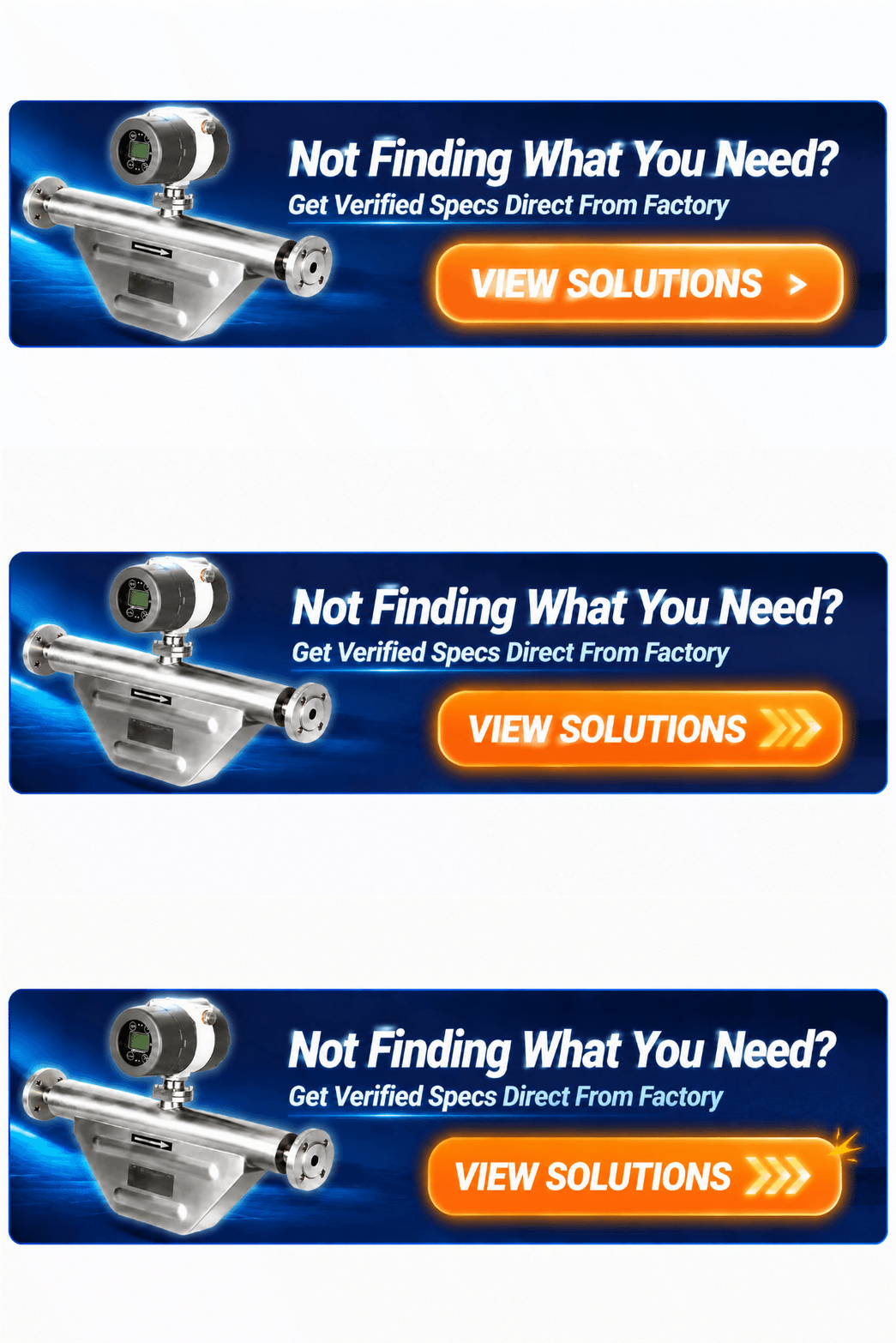
Coriolis mass flow meters handle refrigerant liquids from minus 40 degrees Celsius down to minus 196 degrees Celsius. Silver Instruments offers the silver series Coriolis with a detachable sensor and remote transmitter rated for ATEX Zone 1. Wetted parts are 316L stainless steel, with secondary containment burst discs. Typical accuracy is 0.1 percent of rate for mass flow in kg/h. We can measure R22, R134a, R410A, R290 propane, and ammonia with the same meter. The low temperature calibration is performed at our factory using a cryogenic rig.
Vortex flow meters with integrated temperature and pressure compensation work well for
Thermal mass flow meters are mostly used for gas phase refrigerant blending. They have an integrated flow sensor and rarely suffer from frosting because the probe is heated. Still, for low ambient environments, we supply remote electronics housings.
A Real Site Example from a Cold Store Project in Indonesia
Last year, a cold storage operator in Surabaya, Indonesia, asked us to replace their old turbine meters on an ammonia liquid feed line. The pipes were at minus 33 degrees Celsius, and the environment had 85 percent relative humidity. The original transmitters were caked in ice. We proposed remote mount Coriolis mass flow meters, size DN25, with a 10 meter cable to a purge panel inside a control room. The smart transmitter delivered Modbus RTU and 4-20 mA HART outputs. After installation, no frosting occurred on the electronics. The customer reduced their ammonia loss and improved compressor efficiency. So, remote mounting solved the issue without expensive enclosure heaters.
For a quick quote on a similar setup, email [email protected] with your refrigerant type, pipe size, pressure, and temperature range. You also can reach us on WhatsApp at 86-135-12131526 or call +86-135-1213-1526. WeChat: +86 13512131526.
FAQ: Low Temperature Refrigerant Flow Meter Protection
Can I use any flow meter for liquid ammonia at minus 33 degrees Celsius?
Yes, but only if the transmitter is remote mounted or protected with a heater. A Coriolis meter with a cryogenic sensor and a remote transmitter is ideal for liquid ammonia and other refrigerants.
What is the lowest temperature a Silver Instruments Coriolis flow meter can measure?
Our standard Coriolis meter measures down to minus 40 degrees Celsius. With an optional cryogenic sensor design, we can measure down to minus 196 degrees Celsius for LNG and liquid nitrogen applications. Please share your exact temperature and flow range with our team.
Does frosting affect measurement accuracy?
Yes. Frost can cause the sensor to decouple from the pipe, shift the zero point, and add noise to the 4-20 mA loop. Even a thin layer of ice can change the thermal balance in a thermal mass flow meter.
How do I prevent moisture ingress into the transmitter?
Use IP67 or higher rated enclosures, cable glands with epoxy seals, and a dry nitrogen purge. Silver Instruments can supply pre-purged and sealed transmitters for offshore and cold storage use.
Can you supply the flow meter with an integrated heater for ATEX Zone 1 areas?
Yes. We offer ATEX certified Coriolis meters with self limiting trace heating and a stainless steel junction box rated for Zone 1 gas atmospheres. This option is suitable for propane (R290) and ammonia refrigeration systems. Specify your zone classification and ambient temperature range when you send your inquiry.
Send us your refrigerant type, pipe diameter (DN), pressure in bar, temperature in degrees Celsius, and flow range. Get in touch via email [email protected], phone +86-135-1213-1526, or WhatsApp 86-135-12131526. Add our WeChat for fast support: +86 13512131526.
 Hot News
 Related AD