

『Flow Meter for Tig Welding: Pure Argon Shielding Gas Regulators』Related information(v cone flow meter|rotary gas meter|gallon meter|gear meter|metal tube rotameter|glass tube rotameter|nutating disk meter|transit time ultrasonic flow meter|wedge flow meter|pd meters|hydraulic flow meter|ultrasonic water flow meter|water flow meter|air flow meter|magnetic water flow meter|oxygen flow meter|gas flow meter|argon flow meter|air velocity meter|gasoline flow meter|fuel flow meter|ultrasonic water meter|digital water meter|nitrogen flow meter|solid flow meter|Oxygen tank flow meter|digital water flow meter|diesel fuel flow meter|steam flow meter|02 flow meter|compressed air flow meter|oil flow meter|liquid flow meter)
Flow Meter for TIG Welding: Pure Argon Shielding Gas Regulators
Quick Answer: A TIG torch needs a stable shielding gas flow, not just pressure. A flow meter regulator with a dedicated argon scale lets you dial in the exact litres per minute and hold it steady. Silver Instruments supplies pure argon flow meters with a needle valve and a borosilicate glass tube, factory calibrated for 0-30 L/min and dual scale CFH.
Why a Pressure Gauge Alone Is Not Enough
Most welding gas cylinders come with a single-stage pressure regulator that shows bar or PSI. Those numbers tell you bottle pressure and delivery pressure. They do not tell you the volumetric flow rate. In TIG welding, flow rate controls the gas blanket. Too little argon and the tungsten oxidises. The weld pool gets porosity and grey soot marks. Too much flow creates turbulence that pulls air into the arc and wastes expensive argon. Here is the thing: a 5 L/min overshoot on a 20 L/min setting can blow an extra 1200 litres of argon over one eight-hour shift. That adds up fast for a fabrication shop in Surabaya or a pipeline crew in Oman. A flow meter regulator with a precision metering valve removes the guesswork.
Argon Flow Meter vs. Generic Rotameter
Not every glass tube flow meter handles argon correctly. Argon is denser than air. A cheap rotameter calibrated for air or nitrogen will read low if you run pure argon through it. Silver Instruments builds its TIG gas flow meters with a tube and float specifically for pure argon at a reference condition of 20 deg C and 1 atm. The borosilicate glass tube carries a direct-reading scale in L/min and a secondary scale in CFH, silk-screened and fused onto the glass. The needle valve sits on the low-pressure side, so you can fine-tune flow from 0.5 L/min up to 30 L/min without chasing settings. We have seen this on customer sites many times: a fabricator sets the flow, arcs up, and the float stays rock steady. That is the difference between a thermal mass calibration shop and an online no-name part.
How to Match the Regulator to Your Welding Job
First, check the inlet connection. Most argon cylinders in Australia, the Middle East, and Southeast Asia use a 5/8 inch BSP right-hand thread or a CGA 580 fitting. Our standard argon flow meter comes with a brass CGA 580 or BS 341 No. 8 inlet nut, but we machine custom stems for DIN 6 or AS 2473 if you ask. Second, look at the outlet. A 1/4 inch hose barb or a 5/16 inch push-on nipple works for most TIG torches. Third, think about the flow range. Thin-wall stainless tube welding at 5-12 L/min is different from welding thick aluminium at 15-25 L/min. Pick a flow meter that has its most accurate range in the middle of the scale, not bouncing at the bottom. Most engineers skip this part, but a meter with a 0-25 L/min scale gives you better resolution in the sweet spot than a 0-50 L/min unit. If you do a mix of thin and heavy work, we can supply a dual-flow unit with a high/low bypass.
A Real-Shop Case: Shipyard in Jebel Ali
Last year a maintenance engineer at a ship repair dock in Jebel Ali, UAE, called us about argon flow drift. The workshop was using a basic pressure regulator and a separate plastic ball-type flow indicator. Every time a helper bumped the cylinder trolley, the float jumped and the welder had to re-set the flow. Purging rate was inconsistent and the quality audit flagged gas coverage defects on duplex stainless pipe welds. We sent a Silver Instruments SA-30T argon flow meter regulator with a built-in brass needle valve and a rear housing that clamps directly to the cylinder post. The engineer fitted it in ten minutes. He set the flow to 14 L/min, locked the valve position, and ran twelve passes without touching the dial. His porosity rate dropped to zero on the next five 6-inch SCH 40 pipes. The purchasing manager told us the payback came from gas savings alone in six weeks. That is not a lab story. That is a production shop with salt air, forklifts, and night shifts.
Why Stainless Ste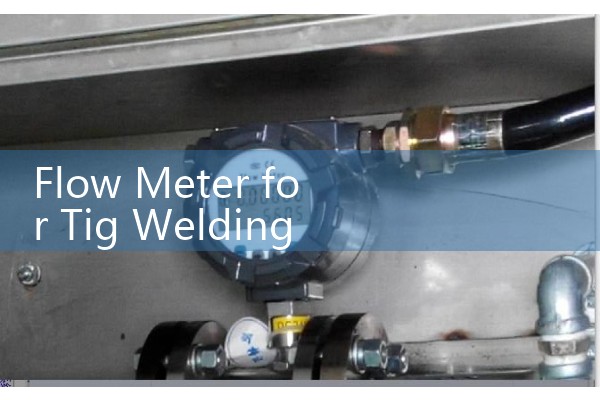
Most TIG gas flow meters use a brass body and a chrome-plated brass needle valve. Brass is fine for dry, high-purity argon. It does not corrode and it machines well. In high-humidity coastal workshops, condensation inside the regulator can turn the valve seat sticky if there is any trace ammonia from AC crush plants nearby. For customers in places like Dammam, Dar es Salaam, or Surat Thani, we offer a 316L stainless steel body option with a PTFE valve seat. It costs more upfront, but you can flush it with isopropyl alcohol and it will not gum. The glass tube is replaceable in the field. The float stops are stainless mesh, not plastic screens that crack after six months. When you open a Silver Instruments flow meter, you see an o-ring made of FKM, not generic Buna-N. FKM holds shape against ozone and heat radiated from the weld zone. That is the kind of detail a piping supervisor notices when he has to order twenty units for a project.
How We Test Each Unit Before Shipment
Every argon flow meter leaves our Nanjing workshop with a serial number and a test sheet. We connect the inlet to a high-purity argon bottle via a mass flow controller reference standard. The standard itself is traceable to a NIST-calibrated Molbox flow terminal. We check five points across the scale: 5, 10, 15, 20, and 25 L/min. Acceptable deviation is plus minus 2.5 percent of full scale. We test the needle valve for ten full-open and full-close cycles and log the hysteresis. The valve packing is adjusted so you get no leakage at inlet pressure up to 200 bar. We bubble-test the outlet and keep the QC record for two years. If you need a 2.1 material certificate for the brass body or a 3.1 certificate for 316L, ask before ordering and we bundle it with the shipment.
FAQ
Q: Can I use the same flow meter for argon and an argon-helium mix?
A: A flow tube calibrated for pure argon will read about 15 percent low on a 70-30 argon-helium blend because helium is less dense. For mixed gases, ask us for a dual-gas conversion chart or a custom scale. We supply multi-gas flow meters with an interchangeable scale plate and correction factors printed on the back.
Q: What is the maximum inlet pressure the flow meter can take?
A: The standard brass body is rated for 200 bar static inlet pressure with a burst safety factor of four. The needle valve is designed for a downstream operating pressure below 3 bar. Always install the flow meter after a primary pressure regulator that brings the line pressure down to 2-4 bar.
Q: Do I need to mount the flow meter vertically?
A: Yes. A glass tube rotameter works by gravity and float buoyancy. Mount it within 5 degrees of vertical. A tilted meter will shift the reading by up to 20 percent. We supply a mounting bracket with a spirit level for permanent wall installations.
Q: What output signal options do you offer?
A: The basic unit is a visual flow indicator with no electrical output. We can build units with a reed switch alarm set at a minimum flow threshold, or a 4-20 mA transmitter with a Hall sensor that reads the float position magnetically. The 4-20 mA model needs a 24 V DC loop and delivers a signal linear to flow. Useful for data logging on orbital welding rigs.
Q: Can I get a flow meter with a factory calibration certificate?
A: Yes. Standard units come with a free QC pass certificate. A formal 5-point calibration certificate traceable to international standards costs a small extra fee. We can also send a digital copy by email before the courier picks up the box.
Tell us your argon flow range in L/min, the cylinder connection thread, and your shop location. We will recommend a flow meter that fits your TIG setup without adapters and guesswork. You can reach our applications team directly.
Email: [email protected] | Tel: +86-135-1213-1526 | WhatsApp: 86-135-12131526 | WeChat: +86 13512131526
 Hot News
 Related AD